
When Toke Moeller speaks about peace, his voice carries both gravitas and gentleness. There is a sense of reflection in how he chooses his words – as if peace is both a serious and a natural subject to speak about. He is not a theorist studying the world from an ivory tower, nor a romantic idealist sheltered from hardship.
His story is one of lived experience – of facing violence, sitting with suffering, and returning again and again to a deep conviction that true peace begins within. This conviction has guided his decades of work as a peace practitioner, educator, activist, host, and facilitator across the world. From conflict zones to European governments, and from still forest clearings to the dinner table, he has carried with him one consistent message: peace is not a lofty abstraction, but a daily practice rooted in sincerity, presence, and human connection.
Toke grew up in post-war Denmark, where peace first meant the absence of war – a matter delt with between nations. That understanding shifted in his teenage years, when he encountered the teachings of the Buddha, the Christ, and the Tao Te Ching. Through their simple wisdom he saw that, though they came from vastly different times and traditions, they all pointed to something remarkably similar: the direct experience and inner peace, beyond religion, dogma, or institutions.
“All these wisdom holders,” Toke reflects, “I don’t think they started the religions that later grew out of their names. They were pointing to something more direct – the experience of life itself, and the peace that can only be found within.”
This understanding – that peace is a direct and personal experience – runs through all of Toke’s work. In his view, peace cannot be “taught” in a conventional sense. We cannot read or study our way to it, nor can our proficiency in it be measured in an exam hall. But peace can be inspired, shared, and practised. And through that, each of us can find our own experience of peace.
Toke describes his path as one of trial and error, of testing different practices until he found what finally worked for him. Peace in his life is found in a combination of meditation and stillness. It is the essence of martial arts as a peace practice, and authentic dialogue between humans. Through this he learned peace on a personal level – embodying it rather than discussing it as a concept. Yet he still sees the need for peace education on a global scale.
“Back in 1948 when I was born,” he notes, “the problem of illiteracy spanned across the world. But we made a collective effort to change that, and today around 80% of the world’s population is literate. What if we did the same with peace?”
His convictions are not born of naivety but from a lifelong hunger for peace, even in dark moments. In his early twenties, Toke was imprisoned in Franco’s Spain for something he had not done. There he was starved and lightly tortured—but instead of feeling anger and hatred towards his abusers, he found compassion within. The experience did not harden him, cementing in mistrust and anger. Instead, it deepened his reflection and his resolve to practice peace, and he began to explore the meditation and knowledge of the self – to meet suffering without fear or anger, to seek understanding in place of revenge.
Over time he combined these insights with the teachings of Aikido, the Japanese martial art often called “the art of peace.” It taught him discipline, presence, and the delicate balance of strength and softness. He carried these lessons with him into some of the world’s most divided regions, facilitating dialogue in Israel and Palestine between communities on both sides of the conflict. He describes his role there not as a lecturer telling people how to make peace, but as a witness and host – offering a neutral space in which to listen and build mutual understanding. Beneath the politics and pain, he could see a universal longing for peace: for safety, dignity, and coexistence.
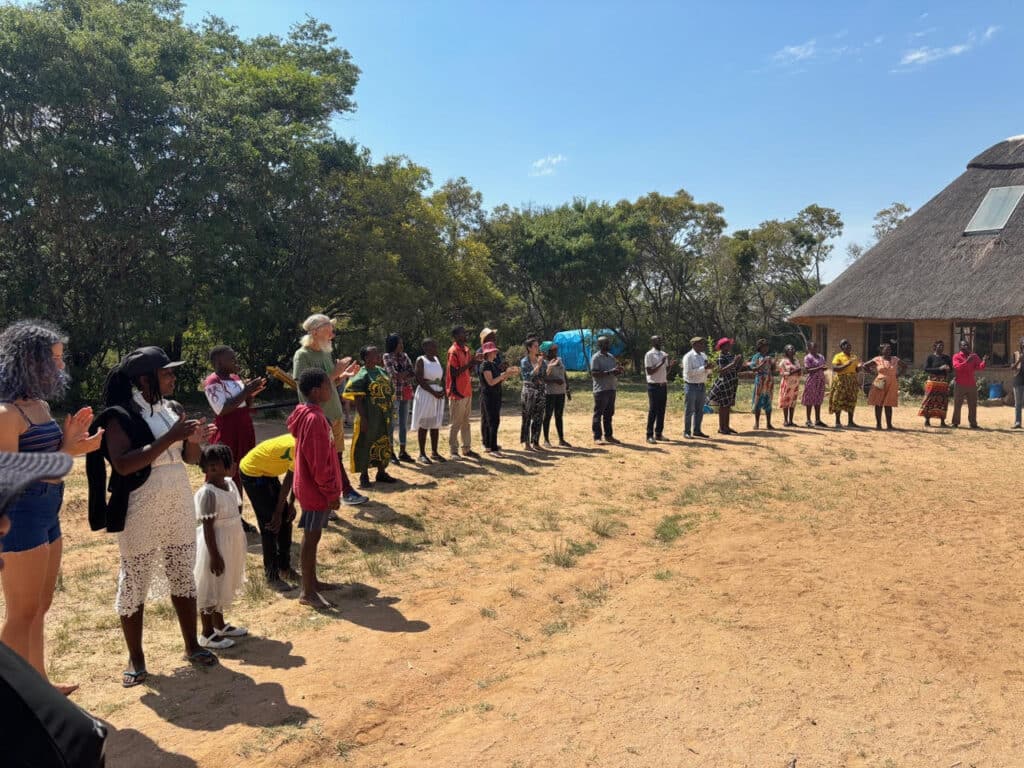
Beyond conflict zones, Toke has spent much of his professional life inspiring others to practice peace in their daily lives. He has worked with tribal leaders in Côte d’Ivoire after the civil war, with indigenous communities in Canada and Zimbabwe, and with institutions such as the European Union. Through this, he has seen both the institutional and grassroots sides of peace. Yet he insists that peace always starts small – within each of us.
In his monthly peace dojos, he gathers together with others, not to debate international politics but to share and experience practices – movement, meditation, and conversation – that embody peace without ever naming it. The message is simple: peace must be lived now. It is in the way you greet a neighbour, the way you listen through disagreement, or the way you respond to conflict within yourself or in the world around you.
“We strive to live the perspective that we do not need to create world peace on our own,” he says with a small smile. “It is enough if we practice peace within ourselves and in a two-metre radius around us. If we all do that, those circles of peace will eventually stretch across the world. It’s a matter of focus and resolve.”
Toke looks to the next generation of peace practitioners with cautious optimism. He sees a growing awareness that peace is not optional but essential, yet he warns against being overwhelmed by the steady stream of crises and chaos. He compares peace practices to weapons: both are tools, and their impact depends on the consciousness behind them. Humanity, he says, holds the capacity for both destruction and profound healing – and through that, for peace.
“Peace is already here,” he concludes. “The question is whether we recognise and accept it—if we choose to practise it from the heart.”
Perhaps that is the essence of Toke’s work: a quiet radicalism that insists peace is possible, not in some distant future but today. It is in our breath, our presence, our relationships. It does not have to begin in the halls of power – it can begin with a single human being, willing to live it.
↓ Image Attributions
[1] & [2]: Images courtesy of Toke Moeller


