
It was the middle of the night when our bus crossed the border into the territory of the former Yugoslavia, from Austria to Slovenia and onwards into Croatia. Our first stop of the roadtrip was the capital Zagreb, marking the beginning of an intense 10-day journey that would take us across all of the former Yugoslav states. We might have been there merely as tourists, but nothing could have prepared us for the immense amounts of political and historical experiences we gathered along the way.
They served as a partially delightful – but mostly painful – reminder of what this region once used to be. We had expected there to be some tensions lingering, as the wars concluded less than 30 years ago. But the sheer level of hatred and polarization lingering to this day, not only between individuals but reproduced even on the state level, was shocking.
Croatia was one of the countries hit hardest by the Yugoslav wars of the 1990s. Upon declaring independence, it found itself at war with the collapsing Yugoslav state and its army, which was mostly Serbs at that point. Because of the large number of Serbs living within the borders of Croatia, especially in its eastern parts, the conflict grew increasingly infected. In the towns of Vukovar, Lovas and Erdut, Croatian civilians were massacred by the Serbs of the Yugoslav army. In Zagreb, we visited the place where some consider the war to have begun: The Maksimir football stadium.
Two of the largest football teams of Yugoslavia – and therefore two of the fiercest rivals – were Croatian Dinamo Zagreb and Serbian Red Star Belgrade. In May 1990, tensions between the countries were at a breaking point and Yugoslavia was falling apart. It was at this point an infamous match between these two rivals took place.
Football has always been very intertwined with politics in the Balkans, and it was not long until chaos ensued and Red Star fans started a riot during the match. Shouting Serbian nationalist chants, they tore down commercial signs and attacked both the police and Dinamo supporters with knives. Over 60 people were injured in the riots, which for many Croats became the event that symbolized the beginning of the resistance against the Serbs.
Our next stop was Belgrade. It was immediately clear how incredibly intertwined Serbian nationalism is with all parts of society. Most other former Yugoslav states have a hostile relationship with Serbia after the 1990s and the widespread ethnic cleansing perpetrated by the Serbian army during the war. In Belgrade, there is not even the smallest mention of the war in general, and the civilian suffering in particular. Not even the Museum of Yugoslavia paid much attention to the war at all. In fact, when standing in Belgrade’s main square, we noticed a large black banner that said “The only genocide in the Balkans, was against the Serbs”.
Reading this, knowing the absolute terror that was perpetrated against civilians during the Yugoslav wars, was haunting and disturbing. Having already seen the wounds of history in Croatia and being about to do so in several other countries, this message lingered in our minds for the rest of the trip. While it was unsettling, it was also an interesting revelation of the modern Serbian mindset, and something that might explain why the wars of the 90s are not talked about there.
Later we went to a Red Star football game, and it was interesting to see how strong the presence of nationalism was even in sports. Many supporters wore anti-NATO and anti-EU shirts, outside the stadium there were graffiti murals portraying Kosovo as Serbia, and in the stands there were more Serbian flags than Red Star flags. Also, due to poor relations with its vicinity and common orthodox culture, Serbia has pursued deeper relations with Russia instead of the West.
Red Star’s main sponsor is the Russian half-state owned company Gazprom, and outside the stadium one could buy souvenirs with Russian flags and patriotic symbols. There were even shirts with the text “Crimea is Russia and Kosovo is Serbia”, portraying the brotherhood of the two nations. Once again, we were shocked to see how this radical Serbian nationalism could be seen in every little corner of society, and how it is even possible that people view Russia in a positive light after 2022.
Our next stop was actually Kosovo, but due to the tensions with Serbia we could not cross the border directly. Instead we had to take a detour through the North Macedonian capital of Skopje, where we stayed for a couple of hours. North Macedonia is one of the few states in former Yugoslavia that has stayed relatively neutral, so there was not very much to see in Skopje in regards to past conflicts. When entering the capital of Kosovo, however, the divides of former Yugoslavia once again made themselves clear. If Serbia is vehemently against NATO and EU, Kosovo is the polar opposite.
Our bus dropped us off at Bill Clinton Avenue, which to no one’s surprise, featured a statue of himself and a huge American flag. He was the president of the United States during NATOs bombing campaign over Serbia, so in Kosovo he is viewed as a hero.
Kosovo felt like an entirely different world compared to what we had experienced in Belgrade. It has much more Middle Eastern influences, stretching back to its time as a part of the Ottoman Empire. Churches were replaced by mosques, Slavic food was replaced by Turkish, and Burek was replaced by Börek. Even urban planning was vastly different. Instead of the characteristic wide roads, enormous squares and high-rise apartment complexes of the former communist bloc, Kosovo had more narrow cobblestone streets and small houses. Even the coffee culture was different, as the number of cafés per capita shot through the roof compared to the Slavic countries.
We left the capital Pristina after a day to go to the much smaller town of Peja for some hiking, and for the first time of the trip it felt like we might as well have been outside of Europe. Not only was the nature absolutely incredible, with beautiful mountains whose peaks all trumped the likes of Kebnekaise and lush green forests that seemed to extend endlessly.
The hospitality of the people in this small town was also unmatched and the general vibe was open and relaxed. Seeing how radically nationalist and offensive the Serbian mentality was, we had expected Kosovo to at least match this level in some ways due to the infected nature of this conflict. But the feeling we instead got was that Kosovans want no more than to be left alone and live peacefully.
After a quick stop in Montenegro, which is not particularly notable concerning post-Yugoslav relations other than remaining as one of few pro-Serbian (or at least not anti-Serbian) countries in the region, we arrived in the Bosnian capital of Sarajevo. Regarding past horrors of war, this was the most painful city to visit.
In Belgrade, atrocities were swept under the rug, but in Sarajevo they were on full display. Several buildings still had bullet holes remaining, there were many monuments honoring the victims of massacres such as the infamous Srebrenica, and in museums there were even more detailed displays. Not one Bosnian is left unaffected by the war, which ended only 30 years ago. Shattered families, mass graves and remaining minefields in the countryside testify to this.
The question of division among the former states of Yugoslavia is very special. It is incredibly fascinating –but at the same time haunting – to think about how that state managed to create such strong brotherhood between historically rivalling people, and then lose it in a tiny fraction of time. How people that were once neighbors became perpetrators of ethnic cleansing against one another. And especially how these rifts are still lingering today.
Much of the relations between countries seem to be based on if you either hate or love Serbia, with almost all countries opting for hate based on aforementioned war crimes. In return, aggressively isolationist Serbian nationalism permeates all parts of society and assimilates people into hating their neighbors. With this, polarization in the former Yugoslavia might only be expected to increase, and a potential violent conflict arising would not be the first time.
↓ Image Attributions
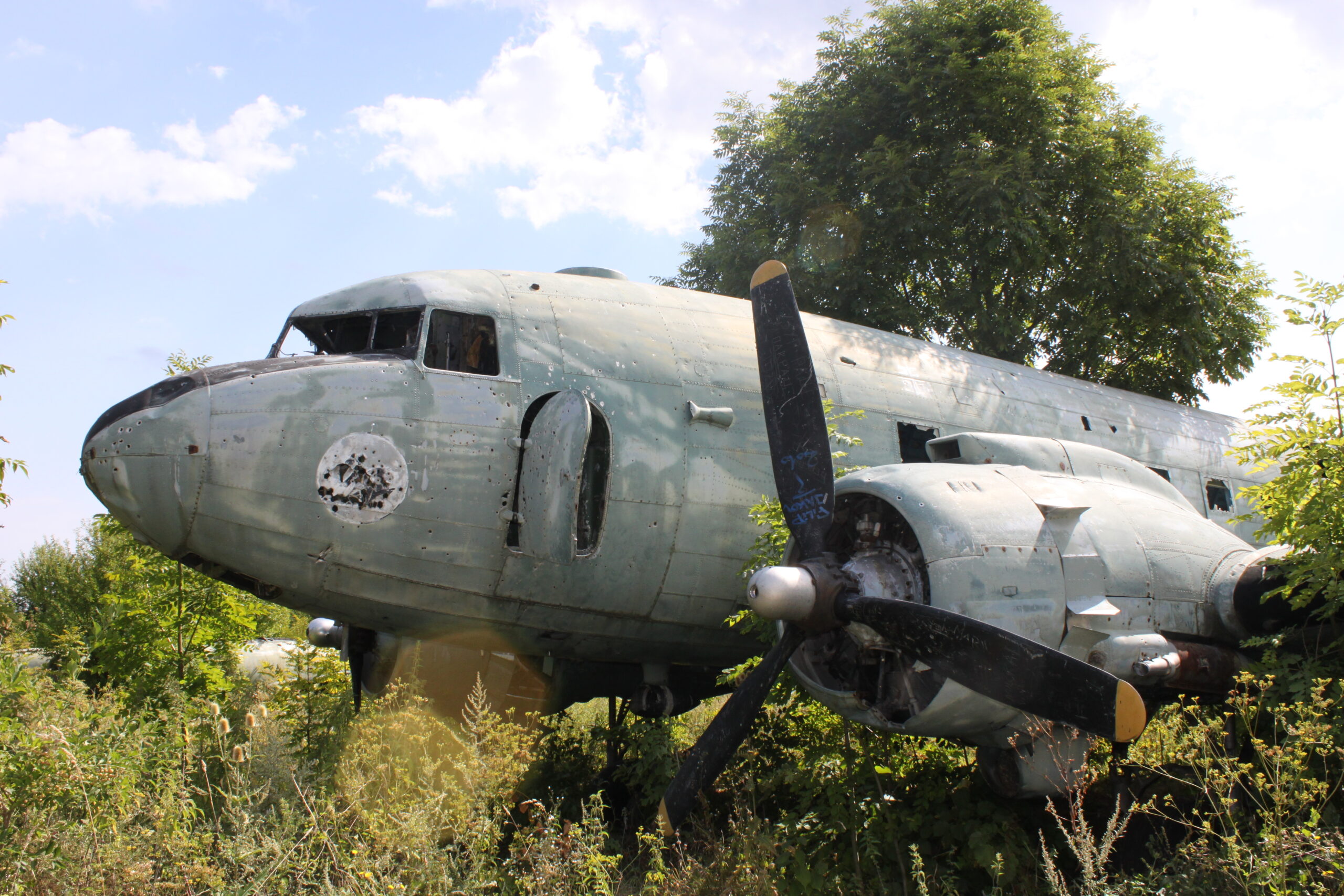
[1]: “Dakota 71212 derelict at Željava Airbase” by Jerry Gunner // Licensed under CC BY 2.0


